
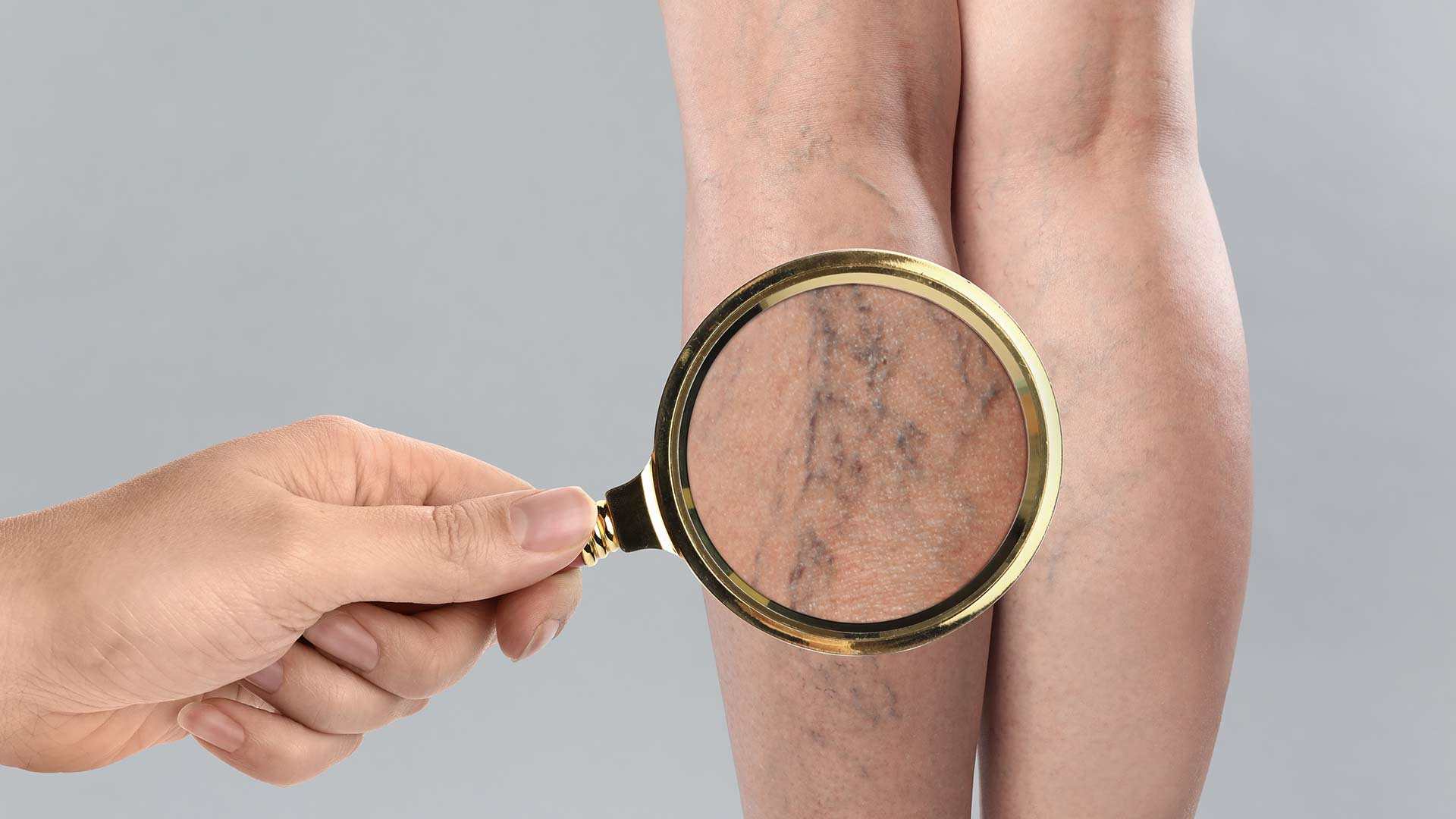
Varicose vein treatment in Kiev
Varicose veins are one of the most common vascular diseases. For a healthy person, the normal rate is blood circulation through the veins from the lower extremities to the lungs and heart.
In case of pathology:
- blood circulation through the veins towards the lungs and heart is significantly complicated;
- Patients with varicose veins experience dilated veins, sharply increased blood pressure, and impaired venous blood circulation;
- venous blood stagnates, in which slags begin to accumulate and settle on the tissues of the lower extremities;
- veins begin to twist, their walls become thinner, aneurysms form, and blood circulation in the venous valves deteriorates;
- When local, aneurysmal dilatations of veins occur, blood flow is turbulent (the blood flow changes from laminar to turbulent). The risk of blood clots forming in these altered veins is extremely high. If, under adverse circumstances, thrombophlebitis or thrombosis of veins altered as a result of varicose veins occurs, the disease transforms into another disease. While medicine has learned to deal with ordinary varicose veins, the treatment process for thrombophlebitis is much different due to its complexity. Yes, there are methods and medications that allow you to dissolve blood clots, operations are performed on thrombosed areas of the venous system, but this is not always effective. Not to mention the fact that there are thromboembolisms with fatal consequences during the detachment of blood clots. Thrombosis of the veins of the lower extremities and the development of post-thrombotic (post-thrombophlebitic) disease lead the patient to disability.
Visually, varicose veins of the lower extremities are the presence of dilated and tortuous veins on the foot, lower leg, and thigh. If varicose disease in the lower third of the lower leg progresses, trophic changes in the tissues occur, up to the formation of trophic venous ulcers that do not heal for years.
In our clinic, we provide comprehensive consultation and treatment services for varicose veins.
According to the ICD-10 classification (International Classification of Diseases), the following are distinguished:
- I83.0 Varicose veins of lower extremities with ulceration
- I83.1 Varicose veins of lower extremities with inflammation
- I83.2 Varicose veins of lower extremities with ulceration and inflammation
- I83.9 Varicose veins of lower extremities without ulceration or inflammation
Types of varicose veins of the lower extremities
There can be many types: from the appearance of a small capillary network to the appearance of ulcers and trophic changes in the skin. In particular, these are the following types:
- varicose veins of the main subcutaneous veins and vessels with vertical and horizontal blood flow;
- varicose veins of the subcutaneous vein (local varicose veins);
- varicose veins of deep veins;
- reticular varicose veins (appearance of small intradermal veins on the thighs and lower legs);
- Intrapelvic varicose veins – a physical condition of a person, which is accompanied by pain in the pelvic organs. Varicose veins also occur quite often on the posterior inner surface of the thighs;
- varicose veins as a manifestation of angiodysplasia (abnormalities in vascular development).
Clinic specializing in the treatment of varicose veins in Kyiv
One of the first complaints is a cosmetic defect – varicose veins. As the disease progresses, there is a feeling of rapid fatigue, heaviness in the legs, cramps in the calf muscles, especially in the evening, and sometimes at night, as well as paresthesia. Edema may appear towards the end of the day, sometimes in the evening, especially after a long stay on your feet, but after a night’s rest they completely disappear. In the future, due to the lack of treatment for varicose veins, edema after a night’s rest will not disappear.
If you enter the query: “varicose veins+surgery+price+Kyiv” in the Internet search engine, you will get budget options, but the treatment of complications requires high qualifications, taking this into account, we set the optimal price for services in our clinic.
Complications of varicose veins
Over time, along with the progression of varicose veins and decompensation of blood flow, trophic disorders appear, more often localized on the inner surface of the lower third of the lower leg: induration, pigmentation, dermatitis, lipodystrophy, dermatosclerosis, then a trophic ulcer develops.
The cost of varicose vein treatment in Kiev and treatment
The goal of treatment is to restore blood circulation in the affected limb. Treatment of varicose veins is the responsibility of vascular surgeons, or phlebologists – vascular surgeons who specialize in vein diseases.
Unfortunately, a damaged vein cannot be restored to its original state by any therapeutic method. There are no pills or ointments for varicose veins. Neither leeches, nor diets, nor medicinal herbs will help get rid of varicose veins. Patients turn to a specialist late, when there are already significant degenerative changes in the tissues of the lower extremities and even venous trophic ulcers.
The cost of varicose vein treatment is a complex issue because the price depends on the specific disease and its stage.
In all types of treatment, it is necessary to eliminate horizontal and vertical reflux of venous blood. To do this, the surgeon must perform surgery on the inoperative ostial valve of the great saphenous vein, the varicose trunk of the great saphenous vein and its tributaries, and the altered veins.
Before surgery, the vascular surgeon must assess the overall condition of the venous system. This requires performing various examinations, duplex scanning of the venous system, and even intravenous phlebography.
There are many approaches to treating varicose veins, but today the most effective method is surgery – venectomy (according to the American Venous Registry).
A woman who suffered from varicose veins in both lower extremities
Recently, minimally invasive surgical treatment methods performed through microscopic incisions or skin punctures (minivenectomy, miniphlebectomy, short-short stripping) have proven themselves well, but they require special tools and certain training of surgeons. When the question arises: where to treat varicose veins in Kyiv? – a person begins to search for the right and competent doctor. That is why we are always happy to provide quality consultation in our clinic.
Laser vein ablation is an outpatient procedure. The varicose veins treatment clinic in Kiev has a high-precision laser device. During this process, the vein is not removed, but is subjected to intravenous obliteration, that is, the vein is burned with a high-energy intravenous laser. The advantage of such an intervention is that the operation is possible through punctures in the skin. It gives a good cosmetic result.
Radiofrequency vein ablation (Endovenous radiofrequency ablation) is a technique similar to laser vein ablation. A probe is inserted into the vein, through which high-frequency energy is pumped to the vein wall, which is then “burned”. As a result, the vein wall turns into a connective tissue scar.
Operations using endoscopic techniques (surgical endoscopes): they are performed when it is impossible to make a skin incision in the projection of the vein in cases where the perforating veins are located under a trophic ulcer.
Sclerotherapy: sometimes used as an auxiliary method, i.e. the vein is “burned” with special chemicals. Recently, this method is rarely used, as it has been replaced by the safer Foam-form sclerotherapy. However, it is also rarely used by vascular surgeons due to the high number of relapses.
Drug therapy is necessary as an auxiliary and independent method at different stages of varicose veins in the presence of contraindications to surgical treatment, as well as after surgery.
Compression therapy is recommended for all stages of varicose veins. The use of compression hosiery can halt the progression of the disease and even eliminate some clinical symptoms.
The type of compression hosiery (compression stockings or tights) and the degree of compression hosiery (1st degree, 2nd degree, 3rd and 4th degree of compression) should be determined by a vascular surgeon, taking into account the form of vascular damage, the patient’s structural features, and even the patient’s gender.
Varicose veins treatment should be carried out by a vascular surgeon who, after diagnosing the vascular system, determines the course of treatment, taking into account the characteristics of the patient’s body. The Internet query “varicose veins+doctor+Kyiv” is undoubtedly in great demand due to the widespread prevalence of this disease.